
Home Office Deduction for Freelancers: Does Your Workspace Qualify?
A dedicated corner can qualify for the federal home office deduction, while a desk that doubles as a household workspace generally fails the exclusive-use test. Learn how to evaluate your setup and compare the simplified and actual expense methods if it qualifies.
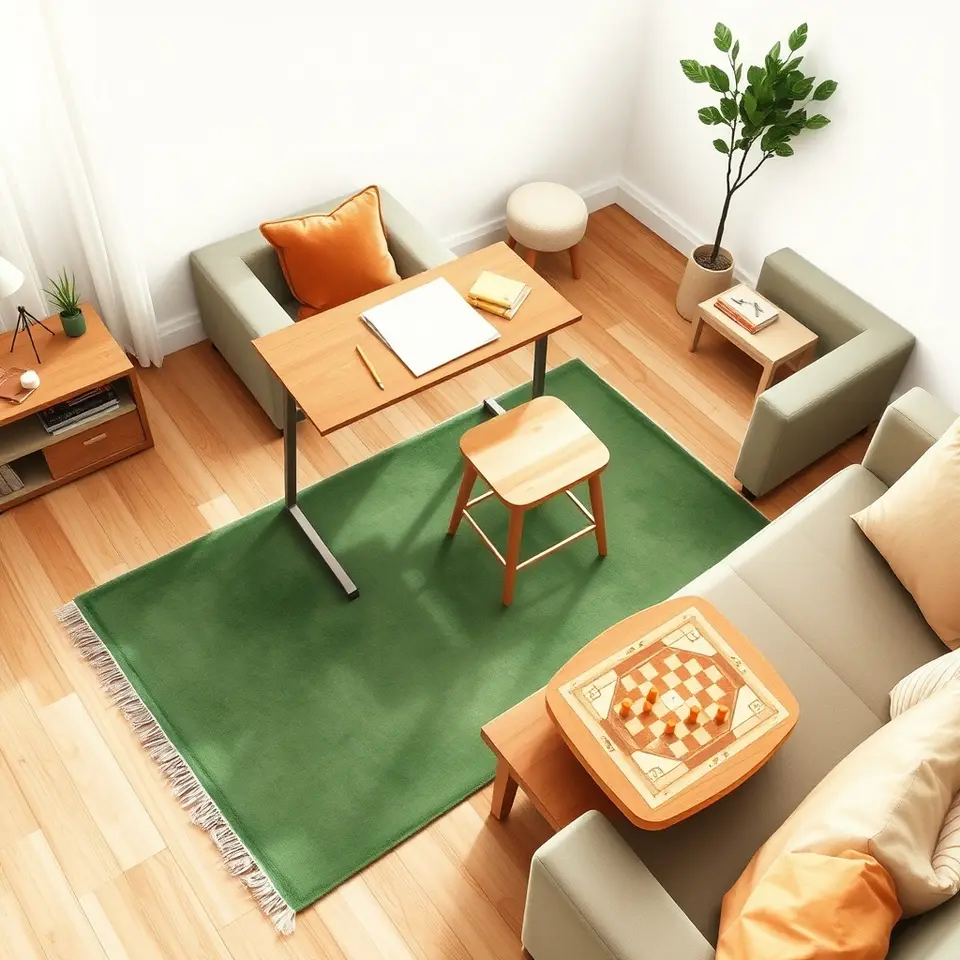
A freelance editor works at a desk in the living room every weekday. Another edits just as often at the kitchen table, where the family also eats dinner. For the federal home office deduction, both freelancers may meet the regular-use test. The difference is what happens in each work area after the editing is done.
The freelancer home office deduction turns on how you use a defined area and what role that area plays in your business. It can apply to renters and homeowners who report self-employment income and expenses on Schedule C. Start by identifying the space, its actual use, and the period it served the business. Those facts determine whether there is a deduction to calculate and what area belongs in the calculation.
What regular and exclusive use means at home
A dedicated corner can count
Under the general rule, you must use a specific area of your home regularly and exclusively for business. Regular use means the space serves the business on an ongoing basis. An occasional afternoon spent answering client emails in a spare room generally falls short. A corner you use every week to edit assignments, invoice clients, and manage projects has a stronger claim to regular use.
Exclusive use concerns what happens in the specific area you claim. A permanent partition is optional. A desk, chair, and nearby work area in one corner of a living room can be a separately identifiable business space even if the sofa across the room serves the household. The eligible area is the portion devoted exclusively to business, so the dimensions of that corner matter more than the size of the living room.
Personal use can change the answer
Suppose a freelance illustrator has a desk that also serves as the household homework station. Even with several hours of client work there every weekday, the area generally fails the exclusive-use test. Splitting the desk’s use by time, such as claiming the weekday hours and setting aside the evenings, does not resolve the mixed use. The same issue can arise in a spare bedroom that still serves as a guest room when the claimed space includes the guest area.
Federal rules provide narrow exceptions for qualifying daycare and for certain inventory or product sample storage. The storage exception can apply when a business sells products at wholesale or retail, the home is its only fixed business location, and the storage area meets requirements that include regular use and being separately identifiable and suitable for storage. A freelancer who keeps ordinary office supplies at a shared desk still evaluates that desk under the general rule.
When your home office is a qualifying business location

Client work can happen elsewhere
A home workspace can qualify as your principal place of business even if you perform paid work elsewhere. For a freelancer who travels to clients, one relevant test is whether the home office is used regularly and exclusively for administrative or management activities and whether the business has another fixed location where the freelancer conducts substantial administrative or management work. Scheduling jobs, billing customers, and keeping business records are examples of these activities.
Consider a freelance photographer who shoots at client locations and uses a dedicated home workspace for scheduling, billing, and maintaining business records. If the photographer has no other fixed location for substantial administrative or management work, the home workspace can meet the principal-place-of-business test through those activities. The location of the photo shoots does not settle the question by itself.
Now consider a photographer who rents a studio and does most scheduling and billing there. A dedicated home desk used regularly to manage a few projects would fail that particular administrative route because substantial administrative work happens at another fixed location. The broader principal-place-of-business analysis can consider the relative importance of the activities performed at each location and the time spent at each. The outcome depends on how the business actually operates.
Client meetings and separate structures have their own rules
A space used regularly and exclusively to meet patients, clients, or customers in person in the normal course of business can qualify under a separate rule. The meetings must be a substantial and integral part of the business. A single client visit or routine video calls alone do not establish eligibility through this in-person meeting rule. Remote work can still support qualification under the principal-place-of-business rules.
A detached garage, studio, or other separate structure can also qualify if you use it regularly and exclusively in connection with the business. A ceramic artist who regularly makes work for sale in a detached studio may qualify under this rule even if another location is the principal place of business. The structure’s business use matters more than what it was originally built for.
How the simplified and actual expense methods differ
Both methods start with qualifying business use. A renter and a homeowner can each have an eligible workspace, but their costs can look very different under the actual expense method. The simplified method uses eligible square footage and an IRS-prescribed rate. The actual expense method uses eligible home costs and allocates shared expenses to the business. Both methods have income limits that can affect the deduction allowed for the year.
| Feature | Simplified method | Actual expense method |
|---|---|---|
| Calculation | Apply the prescribed rate to eligible square footage, subject to an area cap and an income limit. | Combine eligible direct costs with the business share of eligible indirect costs, subject to the applicable limits. |
| Supporting information | Document the qualifying use, workspace measurements, and any changes during the year. | Document the qualifying use and measurements, plus eligible expenses and how you allocated them. |
| Home depreciation | There is no home depreciation deduction for years using this method. | Qualifying homeowners may account for depreciation on the business portion of the building. Depreciation can affect the tax treatment of a later sale. |
| Amounts limited by income | An unused simplified deduction does not carry forward. | Certain disallowed expenses may carry forward and may be deductible in a later year under the actual expense rules. |
| Federal reporting | Calculate the amount using the simplified method worksheet and report it on Schedule C. | Schedule C filers generally calculate the deduction on Form 8829 and report the result on Schedule C. |
How an expense gets assigned to the office
A direct expense applies specifically to the business area. Painting only a dedicated office is one example. An indirect expense supports the whole home, as rent or a utility bill does. The actual expense method generally assigns an eligible portion of those indirect costs to the business. An expense that benefits only a personal area, such as painting a bedroom outside the business space, stays out of the home office calculation.
In a hypothetical example, a renter uses 120 square feet of a 1,200-square-foot apartment exclusively and regularly for a qualifying business all year. Using square footage, the business share is 10%. If annual rent is a hypothetical $18,000, the business share of that rent is $1,800 before the applicable income limit and any other adjustments. An eligible cost for painting only the office would enter the actual expense calculation separately as a direct expense. Under the simplified method, the calculation would use eligible square footage and the prescribed rate. Rent and painting costs would not enter that calculation.
That $1,800 represents one component of a potential deduction. It does not describe the size of a refund or a dollar-for-dollar reduction in tax. A homeowner’s calculation would start with a different set of expenses. Mortgage principal is excluded. Eligible mortgage interest, property taxes, insurance, utilities, and depreciation may enter the actual expense calculation under the applicable rules. For depreciation, the building and land are treated separately because land is not depreciable.
Why the larger preliminary amount may not be the larger deduction
A freelancer with high eligible home costs could calculate a larger preliminary amount under the actual expense method. A freelancer with lower home costs could see a different result using the same amount of space. In either case, the comparison depends partly on how much qualifying business income remains after other business expenses. The limits under each method operate differently, so the amounts allowed for the year may differ from those first estimates.
Freelancers can generally choose a method each tax year. If income limits prevent a freelancer from deducting certain actual expenses, those amounts may be available in a later year when the freelancer uses the actual expense method and meets the applicable limits. A year using the simplified method does not absorb an actual expense carryforward. For homeowners comparing methods across years, earlier depreciation also remains relevant to a later sale.
What changes when you move, start midyear, or share space
Qualification can change during the year. If a freelancer turns a guest room into a dedicated office midway through the year, the business-use period starts when the qualifying use begins. A move can create two sets of measurements and use dates. Under the actual expense rules, those dates help identify which expenses belong to the qualifying periods. The simplified method has specific rules for averaging eligible square footage when business use changes during the year, and its election generally applies to only one home if you used more than one home for business that year.
A freelancer with an employee job should also distinguish work for that employer from work for the Schedule C business. A day spent working remotely for an employer does not establish eligibility for the freelance deduction. If both jobs use the same area, the rules governing each use can affect the claim. Likewise, a household with two self-employed people should identify the portion each person uses. Under the simplified method, each eligible person may account for a different portion, and the same square footage cannot be counted twice.
Different methods require different expense details, but both depend on evidence of how and when the space was used. A few records can explain the facts behind the calculation:
- A dated sketch or measurement showing the boundary of the business area and, for a square-footage allocation, the total area used in the calculation.
- A brief description of the work done there and any other fixed locations where substantial administrative or management work happened.
- The dates the space became eligible, changed size or purpose, or stopped serving the business.
- For the actual expense method, records such as a lease, utility bills, or repair invoices that show which expenses applied to the entire home and which applied directly to the workspace.
How to assess your workspace before comparing costs
Start with a typical week. Identify the precise area where the business operates, how often it operates there, and what else happens in that space. If the area is regularly and exclusively used for business, identify why it qualifies as a business location. That might be where you manage the business, where you routinely meet clients in person, or where you work in a separate structure.
Then connect those facts to the period you are evaluating. A desk used only for freelance work after a midyear conversion has a different history from a desk dedicated to the business from the start. Once the use and timing are clear, comparing the simplified and actual expense methods becomes a question of eligible area, costs, income limits, and, for some homeowners, depreciation. The same reasoning applies whether the workspace is a corner of an apartment or an entire detached studio.
By FinancemonkPublished
← More from the journal