
When Is the Bigger Grocery Package Really Cheaper?
A bigger grocery package can cost less per ounce and still cost more for the food you actually use. Learn how to compare shelf tags, account for discounts, and calculate how much of a package you need to use for the larger size to pay off.
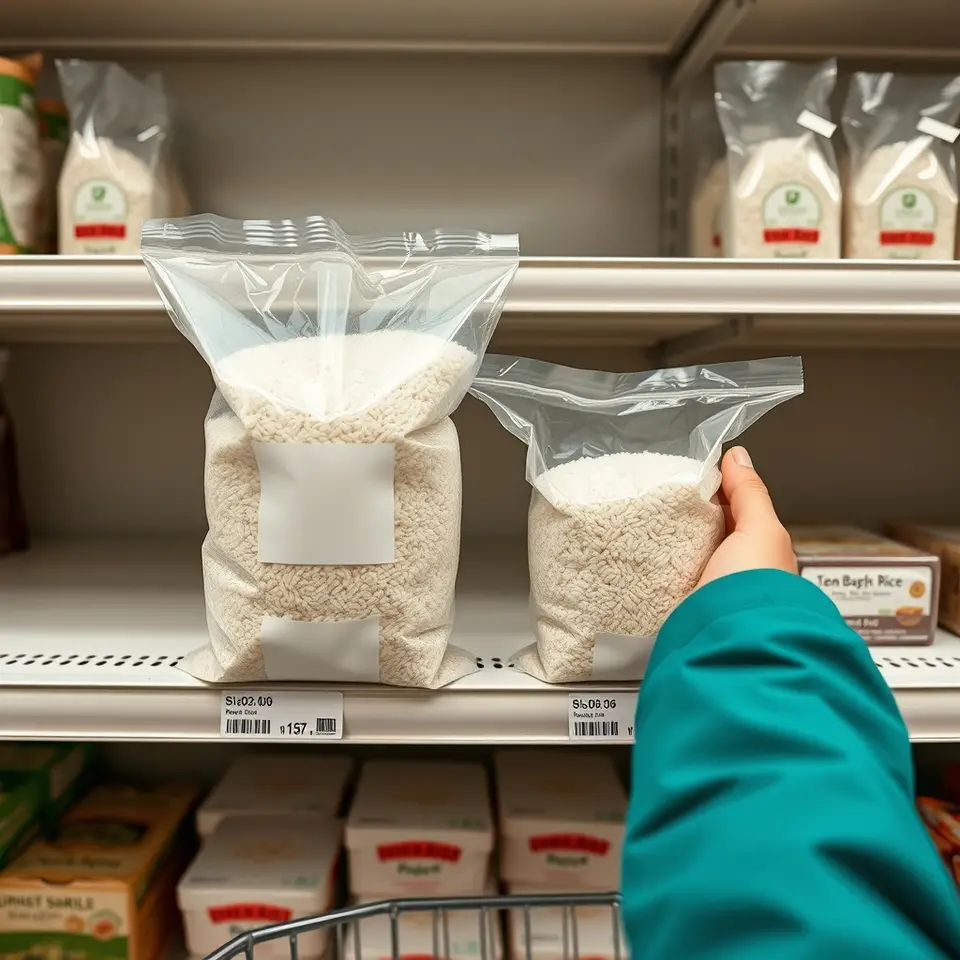
A 16-ounce bag of rice costs $3.20. A 40-ounce bag costs $6.00. The larger bag costs almost twice as much at checkout, yet each ounce costs five cents less. If your household cooks rice regularly, that difference can carry through several meals. If you only end up using a third of the bag, the comparison changes.
Learning how to compare grocery unit prices starts with putting both packages on the same scale. Then you can ask two questions a shelf tag can’t answer for you. How much of the package will you actually use, and what will the larger purchase cost you today? The prices and quantities in the examples below are hypothetical.
How to compare grocery unit prices
A unit price is the cost of a standard amount, such as one ounce, one pound, or one item. Divide the package price by the quantity in your chosen unit. For the rice, that’s $3.20 divided by 16 ounces and $6.00 divided by 40 ounces.
| Package | Amount | Price at checkout | Price per ounce | Price per pound |
|---|---|---|---|---|
| Smaller bag | 16 oz | $3.20 | $0.20 | $3.20 |
| Larger bag | 40 oz | $6.00 | $0.15 | $2.40 |
The larger bag has a 25% lower unit price at either scale. You get the same result per pound because a pound contains 16 ounces. The checkout column answers a separate question. Choosing the larger bag takes an additional $2.80 from today’s grocery budget.
Match the units on the shelf tags
Suppose one tag lists $0.20 per ounce and another lists $2.40 per pound. Multiply $0.20 by 16 to get $3.20 per pound, or divide $2.40 by 16 to get $0.15 per ounce. Either conversion makes the ranking clear. If a tag is missing or rounded enough to make two prices look tied, calculate from the package price and labeled quantity, then round at the end.
Check what the unit measures. Ounces measure weight on a bag of rice, while fluid ounces measure volume on a bottle of juice. You can convert quarts to fluid ounces or pounds to ounces directly. A conversion between fluid ounces and ounces by weight requires information about the product, so look for a common labeled measurement first. For a multipack, multiply the number of containers by the amount in each when you need the total package quantity. A carton with six 4-ounce cups contains 24 ounces.
Choose a unit that reflects how you cook
For two packages of the same oatmeal, price per ounce usually answers the quantity question. When the products come in different forms, compare what each one contributes to a meal. A can of beans includes liquid you may drain, while a bag of dry beans gains weight during cooking. The packaged price per ounce compares what you carry home. Cost per cup of drained or cooked beans compares what goes into the recipe.
You can estimate that second figure from a listed yield or from what you measured the last time you prepared the food. The same idea applies to concentrate. If a $3.60 bottle makes 48 fluid ounces of prepared juice and a $4.00 bottle contains 64 fluid ounces ready to drink, the respective costs are 7.5 cents and 6.25 cents per prepared fluid ounce. The second bottle costs 40 cents more and provides 16 more fluid ounces to drink, assuming both are used in full.
Recalculate when a sale changes the price
A shelf tag is a starting point. An eligible coupon, a loyalty price, or a temporary sale can change the comparison. Use the price you would pay for the quantity you would actually take home. In the rice example, a $1.00 discount on the smaller bag brings it to $2.20, or 13.75 cents per ounce. That beats the larger bag’s 15 cents per ounce if the larger bag stays at its regular price.
Check how many packages receive the discount. If the coupon applies to one small bag, two small bags cost $5.40 for 32 ounces after the discount. That works out to about 16.88 cents per ounce. The large bag again has the lower unit price when those are the two purchase options, although the two small bags together still cost 60 cents less at checkout.
Read the quantity requirement
For a shelf sign advertising two 12-ounce tubs for $5.00, check whether you can get one tub for $2.50 or whether the deal requires buying both. If both are required, you would pay $5.00 for 24 ounces, or about 20.83 cents per ounce. If you only want one and it costs $3.00 by itself, your comparison for that purchase starts at 25 cents per ounce.
For a quick check after shopping, compare the item price and any item-level discount on the receipt with what you used in your calculation. That is especially helpful when a sale has a minimum quantity or a discount applies to only one package size.
Calculate the cost of what you’ll actually use
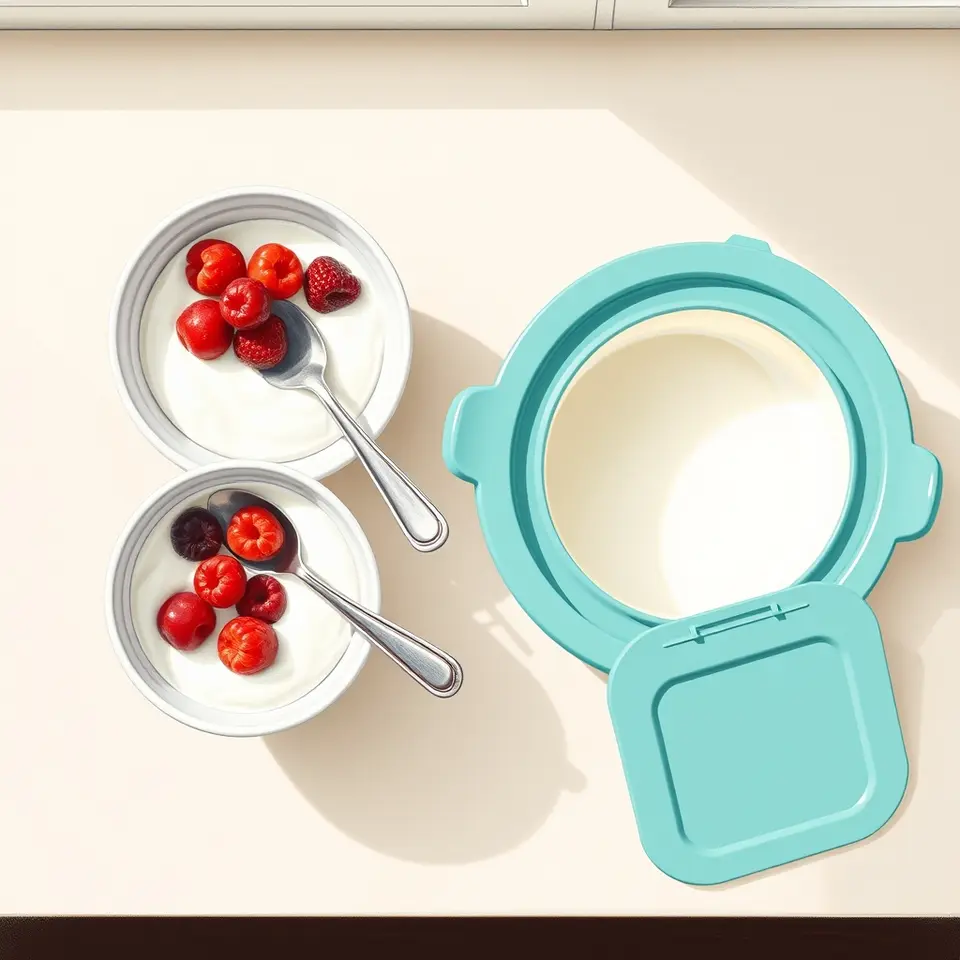
To account for food that will go unused, divide the package price by the amount you expect to use. Take a 16-ounce tub of yogurt for $4.00 and a 32-ounce tub for $6.00. If you finish both sizes, the smaller tub costs 25 cents per ounce and the larger tub costs 18.75 cents per ounce. If you use only 20 ounces from the large tub and discard the rest, those 20 ounces effectively cost you 30 cents each.
Find the break-even amount
Assuming you finish the smaller tub, its 25-cent unit price is the benchmark. Divide the large tub’s $6.00 price by $0.25 per ounce. The result is 24 ounces. At exactly 24 ounces used, the large tub matches the smaller tub’s cost per ounce. Above 24 ounces, the larger tub is cheaper per ounce used. Below that amount, the smaller tub has the lower cost per ounce used. If you expect to leave some of the small tub unused too, recalculate its benchmark using the amount you expect to eat.
Suppose one household expects to use 28 ounces in breakfasts and cooking. For that household, the large tub costs about 21.43 cents per ounce used. Buying two small tubs to cover the same 28 ounces would cost $8.00 up front, compared with $6.00 for the large tub. If the remaining four ounces from those two small tubs get used later, they still have value in the comparison.
Another household needs only 16 ounces for a recipe and expects to have no use for the rest. Buying the large tub costs that household $6.00 for the same amount it would use from a $4.00 small tub. The shelf prices are identical for both shoppers. Their plans for the food change the outcome.
Give leftovers credit when they have a use
Base the estimate on meals you already make and the storage you have. If you regularly finish a bag of rice over several weeks and can store it appropriately, the rice left after dinner still counts toward the amount you expect to use. If the last few portions of a perishable food routinely get thrown out, use that experience to make a more realistic estimate. For a close comparison, try a lower and a higher estimate. In the yogurt example, 22 ounces used favors the smaller tub on cost per ounce, while 26 ounces favors the larger one. A plan for four ounces can change the result.
Weigh today’s checkout total against future use
The $6.00 rice bag gives you 24 extra ounces for $2.80 more today. That extra rice has value if it covers meals for which you would otherwise buy another bag. If you have $4.00 available for rice on this trip, the $3.20 bag fits and the $6.00 one exceeds the amount available. The bigger bag’s 25% unit-price advantage still describes the price of the rice. It leaves the immediate spending constraint in place.
Whole packages matter when you compare the total cost of covering a specific need. If your planned meals call for 32 ounces of rice, two small bags cost $6.40 and the big bag costs $6.00. The big bag costs 40 cents less at checkout and leaves eight ounces for later. If your meals call for only 16 ounces and you won’t use any extra, one small bag covers the need for $2.80 less. You can usually make a decision by looking as far ahead as you can reasonably estimate your use.
Packaging can also affect that estimate. Two separately sealed 8-ounce packs may suit a household that opens one at a time. A single 16-ounce package may work just as well for a household that goes through it quickly. Compare the total price for the same 16 ounces, then consider whether either format changes how much food will go unused.
A quick check for your next grocery trip
You can run the comparison on one item you buy regularly or one that often goes unfinished.
- Pick a common unit. Compare ounces with ounces, pounds with pounds, or equal amounts of the prepared food when the package forms differ.
- Use the price you’ll pay. Check the size, discount eligibility, and required quantity before calculating.
- Estimate how much you’ll use. If there’s a meaningful chance of waste, divide each price by its expected usable amount.
- Check the checkout total. See which purchase covers what you need, fits the amount available today, and leaves extra food you have a realistic plan to use.
When both sizes fit your budget and you expect to finish either one, the lower unit price is enough to settle the comparison. When the bigger package leaves you with food you may discard, the break-even amount tells you how much has to make it into meals before the lower shelf price becomes a saving.
By FinancemonkPublished
← More from the journal